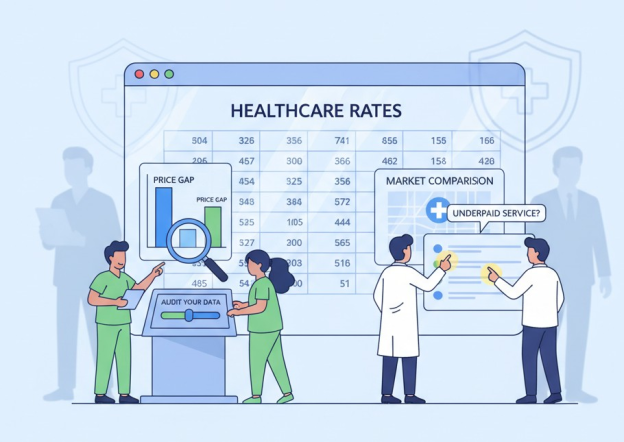
Effective Pricing Strategies for Healthcare Providers
In today's competitive healthcare landscape, developing effective pricing strategies is essential for providers looking to maintain financial sustainability while delivering high-quality patient care. This article explores practical approaches to healthcare pricing that can benefit both providers and patients.
The Challenge of Healthcare Pricing
Healthcare providers face unique challenges when it comes to pricing:
- Complex reimbursement models from multiple payers
- Regulatory requirements around pricing transparency
- Balancing profitability with patient affordability
- Communicating value effectively to patients
Key Pricing Strategies for Healthcare Providers
1. Cost-Based Pricing
Cost-based pricing involves calculating the actual cost of providing a service and adding an appropriate margin. This approach ensures that all expenses are covered and that the practice remains financially viable.
Implementation tips:
- Conduct thorough cost analyses for all services
- Include both direct and indirect costs
- Regularly update cost calculations to reflect changing expenses
- Set reasonable margins based on market conditions
2. Value-Based Pricing
Value-based pricing focuses on the outcomes and benefits that patients receive rather than just the cost of providing the service. This approach aligns with the industry shift toward value-based care.
Implementation tips:
- Document and communicate patient outcomes
- Highlight unique aspects of your care delivery
- Gather and share patient testimonials
- Demonstrate cost-effectiveness through comparative data
3. Market-Based Pricing
Market-based pricing involves setting prices based on what competitors charge for similar services. This approach helps ensure that your prices remain competitive while still covering costs.
Implementation tips:
- Regularly research competitor pricing
- Consider your positioning in the market (premium vs. affordable)
- Adjust prices based on your unique value proposition
- Monitor patient response to pricing changes
4. Bundled Pricing
Bundled pricing involves offering a package of related services for a single price. This approach can simplify the patient experience and potentially increase utilization of services.
Implementation tips:
- Identify commonly co-occurring services
- Calculate the total cost of the bundle
- Offer a slight discount compared to individual service pricing
- Clearly communicate what's included in the bundle
Implementing Transparent Pricing
Regardless of which pricing strategy you choose, transparency is increasingly important:
- Clear communication: Provide easy-to-understand pricing information before services are rendered
- Accessible format: Make pricing available online, in print, and through staff discussions
- Complete information: Include all potential costs, not just base prices
- Regular updates: Keep pricing information current and accurate
Technology Solutions for Pricing Management
Modern healthcare practices can leverage technology to implement and manage pricing strategies:
- Price estimation tools: Allow patients to get personalized cost estimates
- Analytics software: Track the impact of pricing changes on volume and revenue
- Patient financial engagement platforms: Help patients understand and plan for healthcare costs
- Competitive intelligence tools: Monitor market pricing trends
Case Study: Community Health Center Success
Community Health Center of Springfield implemented a transparent, value-based pricing model with these results:
- 22% increase in patient satisfaction scores
- 15% reduction in billing-related inquiries
- 8% growth in new patient acquisition
- Improved collection rates and reduced bad debt
Balancing Profitability and Accessibility
Effective pricing strategies must balance business needs with patient access:
- Consider offering sliding scale options for patients with financial need
- Develop payment plans that make care more accessible
- Implement financial counseling services
- Partner with community organizations to support underserved populations
Measuring Success
To evaluate the effectiveness of your pricing strategy, track these key metrics:
- Revenue per service
- Patient acquisition and retention rates
- Collection rates
- Patient satisfaction with billing and financial experience
- Competitive position in your market
Conclusion
Developing effective pricing strategies is both an art and a science for healthcare providers. By taking a thoughtful, data-driven approach that considers costs, market conditions, and patient needs, providers can create pricing models that support financial sustainability while delivering value to patients.
MedReveal offers comprehensive tools and consulting services to help healthcare providers develop and implement effective pricing strategies. Contact us to learn how we can support your practice's financial health while enhancing the patient financial experience.